


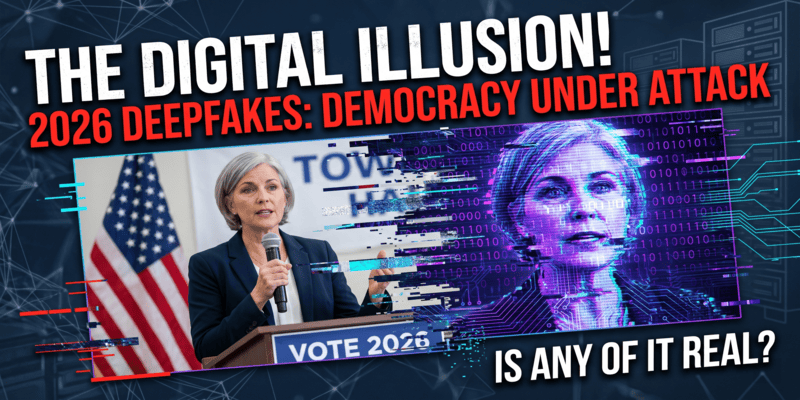
The political battlegrounds of America have fundamentally shifted from town halls to server farms. As the campaign season enters its crucial spring phase, an unprecedented wave of 2026 midterm election deepfakes is flooding local social media feeds, leaving voters struggling to separate reality from algorithmic fabrication. This isn’t just a minor tech glitch; it is a coordinated assault on the democratic process.
The Weaponization of Synthetic Media
Campaign managers across the country are waking up to a nightmare scenario. In key swing states, highly convincing, AI-generated audio clips of candidates purportedly confessing to crimes or insulting constituents are being injected into closed neighborhood networking apps.
“We are spending 60% of our daily media budget just debunking videos that never actually happened. The technology has outpaced the truth.” — Veteran Campaign Strategist in Ohio
The sheer volume of these 2026 midterm election deepfakes has overwhelmed traditional fact-checkers. By the time a synthesized video of a senatorial candidate is flagged and removed by major platforms, it has already been downloaded, clipped, and redistributed across encrypted messaging channels a million times over.
The Federal Response Lags Behind
The newly passed US AI Regulation Bill was supposed to curb this exact scenario, but enforcement remains a logistical nightmare. While the legislation mandates clear watermarking for all generative media, rogue actors simply route their rendering farms through offshore servers, bypassing American jurisdiction entirely. Until cybersecurity agencies develop real-time, automated verification filters, the integrity of the November ballots remains highly vulnerable to digital sabotage.






No Comment! Be the first one.