


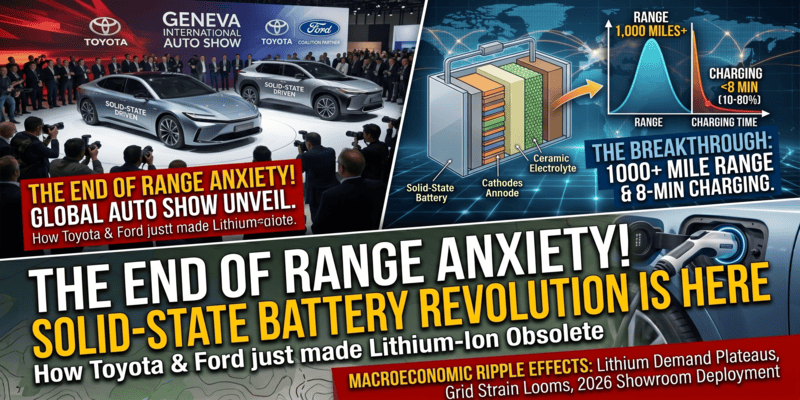
The Bottom Line: The long-promised solid-state battery revolution has officially arrived. During the International Auto Show in Geneva this morning, a coalition of top-tier automakers, including Toyota and Ford, unveiled the first line of commercially available electric vehicles powered entirely by solid-state architecture.
For the last decade, the EV market has been bottlenecked by the limitations of lithium-ion chemistry. The transition to solid-state technology which replaces the flammable liquid electrolyte with a solid ceramic or polymer material completely rewrites the physics of personal transportation.
Unprecedented Range and Charging Speeds
The data released during the expo outlines exactly why the solid-state battery revolution will rapidly obsolete internal combustion engines. The newly showcased flagship sedans boast a verified EPA range of over 1,000 miles on a single charge.
Furthermore, the new battery architecture safely accepts massive electrical loads without degrading. Drivers will be able to recharge from 10% to 80% capacity in under 8 minutes, effectively making charging an EV as fast as pumping a tank of premium gasoline.
The Macroeconomic Ripple Effects
The commercialization driving the solid-state battery revolution extends far beyond consumer convenience; it shifts global supply chains.
- Lithium Demand Drops: Because these new cells utilize different raw materials, the global scramble for traditional liquid lithium will likely plateau, devastating mining economies heavily reliant on legacy battery tech.
- Grid Infrastructure: The ability to rapidly pull immense amounts of power in 8 minutes will place unprecedented strain on local electrical grids, forcing municipalities to massively upgrade their high-voltage transformer networks before the cars hit showroom floors in late 2026.







No Comment! Be the first one.