


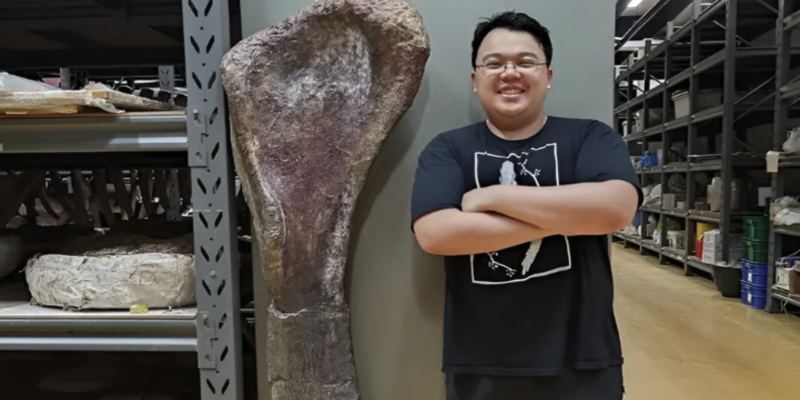
In a monumental breakthrough for paleontology, scientists have officially unveiled Nagatitan chaiyaphumensis, a colossal long-necked dinosaur that has just shattered the record for the largest dinosaur ever discovered in Southeast Asia. Painstakingly excavated from a prehistoric pond in Thailand’s Chaiyaphum province, this massive sauropod roamed the Earth over 100 million years ago during the Early Cretaceous period.
Massive Scale of the Nagatitan
Based on remarkably well-preserved femurs and vertebrae recovered from the excavation site, researchers have calculated staggering physical dimensions for this ancient beast. It belongs to the titanosauriforms, a subgroup of sauropods known for incredibly long necks, pillar-like legs, and massive bodies designed to strip vegetation from high forest canopies.
| Dinosaur Profile | Nagatitan chaiyaphumensis |
| Estimated Length | 89 feet (27 meters) – roughly a basketball court |
| Estimated Weight | 27 tonnes (equivalent to 9 Asian elephants) |
| Geological Era | Early Cretaceous (Over 100 million years ago) |
| Location Found | Chaiyaphum Province, Thailand |
| Classification | Titanosauriform (Sauropod) |
The “Last Titan” of a Lost Ecosystem
What makes the Nagatitan discovery particularly fascinating is its evolutionary timeline. Researchers are calling this creature the “last titan” of Southeast Asia. During the Early Cretaceous period, Thailand featured a dry, subtropical environment with sprawling floodplains capable of supporting these immense herbivores.However, geological records indicate that shortly after the era of the Nagatitan, shifting tectonic plates and rising global ocean levels began to permanently flood the landscape. This environmental transformation turned the dry floodplains into a massive, shallow inland sea, effectively wiping out giant terrestrial sauropods in the region. The discovery of Nagatitan chaiyaphumensis adds a spectacular new branch to the dinosaur family tree and marks the final chapter of giants in ancient Southeast Asia.






No Comment! Be the first one.