


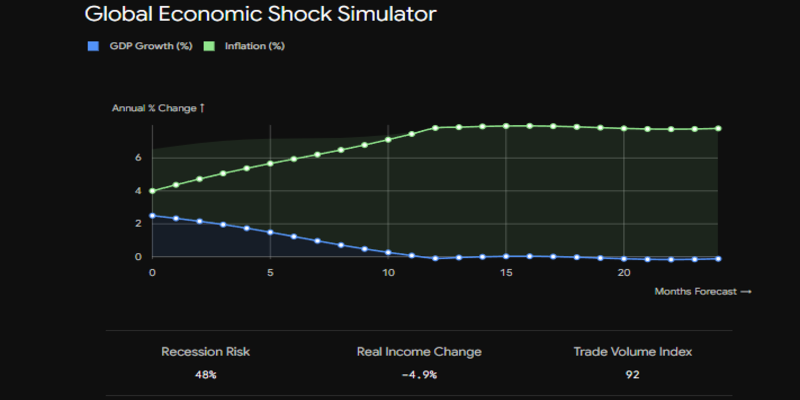
In its highly anticipated Spring 2026 World Economic Outlook, the International Monetary Fund (IMF) painted a stark picture of the global landscape. Titled “Global Economy in the Shadow of War,” the report emphasizes that while there has been continued resilience in certain sectors—notably services trade—the downside risks currently dominate the forecast.
Table Of Content
The IMF notes that the dual trends of growth and disinflation have been violently interrupted. The global economy is being tested again by fragmented supply chains and rising protectionism. The report underscores the need for nations to address current shocks while simultaneously preparing their fiscal policies for future volatility, highlighting a global economy that is skating on incredibly thin ice.
Energy Prices and the Resurgence of Inflation
A primary driver of the current economic anxiety in May 2026 is the sharp spike in global energy prices. Testifying before legislative committees this month, central bank officials, including those from the Bank of Canada, highlighted how the war in the Middle East has disrupted shipping for commodities and sent oil prices soaring.
This energy shock is hitting consumers directly at the gas pump and is creating a cascading effect on food price inflation. For over a year, many Western economies had successfully wrestled inflation down close to the target 2% mark. However, the surge in energy costs threatens to undo that progress. In Canada, for instance, CPI inflation jumped from 1.8% in February to 2.4% in March, with expectations that it could peak around 3% by early summer. Central banks are closely monitoring whether this energy spike will bleed into broader goods and services, resulting in persistent, generalized inflation.
The Ripple Effect of Trade Tariffs on Global Markets
Compounding the inflation issue is the intense uncertainty surrounding global trade, particularly regarding U.S. tariff policies. Throughout early 2026, the imposition and subsequent legal battles over U.S. tariffs have weighed heavily on business investment and export growth worldwide.
The threat of a widespread tariff war forces companies to raise prices to cover the cost of imported goods, directly passing the financial burden onto consumers. Furthermore, the constant flux in trade policy discourages long-term capital investment. Economic growth projections in countries heavily reliant on U.S. trade, such as Canada and Mexico, have been continually revised as they adjust to the headwinds of protectionism and counter-tariffs.
Central Banks on High Alert: The Bank of Canada’s Blueprint
To navigate these turbulent waters, central banks are being forced to adopt highly flexible, “nimble” monetary policies. The Bank of Canada’s recent Monetary Policy Report provides a clear blueprint of this tightrope walk. Last week, the Governing Council opted to hold the policy interest rate at 2.25%.
The strategy is twofold. First, central banks are attempting to “look through” the immediate, short-term impacts of the war and energy spikes, hoping they are temporary. However, they remain ready to act aggressively if necessary. If energy prices remain stubbornly elevated and cause ongoing generalized inflation, central banks have signaled they will initiate consecutive increases in policy rates. Conversely, if harsh new trade restrictions crush economic growth, banks must be prepared to cut rates to stimulate the economy.
Navigating the Rest of 2026
As we look toward the second half of 2026, the global economy is in a holding pattern. The assumptions holding current economic forecasts together—namely that oil prices will eventually stabilize and trade tariffs will not escalate into a full-blown global trade war—are highly tenuous. Investors, businesses, and consumers must remain vigilant, as the unusually elevated uncertainty means the global economic situation could pivot dramatically with a single geopolitical event.






No Comment! Be the first one.