

Missing the Innovation Wave: Why European Defense Technology Startups are Sidelined in the Rearmament Boom

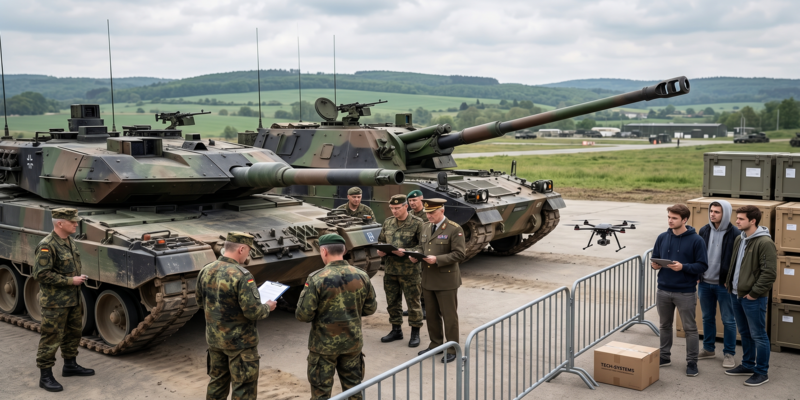
Europe is currently experiencing its most aggressive military expansion since the Cold War. Trillions of euros are being funneled into defense budgets as nations like Germany, Poland, and France scramble to rebuild their conventional military capabilities. Yet, an alarming paradox has emerged within the continent’s tech ecosystem. A comprehensive market analysis published today reveals that up to 90% of new defense procurement funding is flowing directly to legacy aerospace and defense giants, leaving innovative defense technology startups completely locked out of the market.
Table Of Content
While Europe successfully builds an outer shell of conventional armor and artillery, its failure to integrate nimble, software-first technology companies risks creating a severe generational gap on the future battlefield.
The Bureaucratic Wall: Why Startups Can’t Win Contracts
The primary obstacle facing European defense technology startups is not a lack of innovative ideas or engineering talent. Rather, it is a rigid, archaic government procurement framework that was designed in the mid-20th century to purchase heavy machinery, not software.
Startups attempting to break into the European defense market routinely face systemic procurement barriers:
- Prohibitive Security Clearances: Obtaining the necessary facility security clearances to pitch a software concept can take upwards of 24 months, a timeline that can easily burn through a venture-backed startup’s entire seed funding capital.
- Bloated Request-for-Proposal (RFP) Cycles: Traditional defense bidding processes require hundreds of pages of documentation and multi-year testing phases, favoring the massive legal and compliance departments of legacy primes over lean engineering teams.
- Inflexible Budget Cycles: European defense ministries often lock in procurement budgets five to ten years in advance, making it virtually impossible to fund rapid software iterations or commercial off-the-shelf electronic warfare tools.
The Contrast: How the United States Capitalizes on Agile Tech
The funding crunch facing European firms stands in stark contrast to the strategic landscape in North America. The US Department of Defense has spent the last decade actively cultivating an ecosystem for defense technology startups through entities like the Defense Innovation Unit (DIU) and the multi-billion-dollar National Security Innovation Capital fund.
By utilizing rapid contracting mechanisms like Other Transaction Authorities (OTAs), the US military can award developmental contracts to small software firms in a matter of weeks. This allows American startups specializing in artificial intelligence, computer vision, and autonomous swarm robotics to secure steady government revenue, scale their operations, and quickly transition cutting-edge tech from the lab to active deployment.
The Long-Term Operational Threat to European Security
If European defense ministries do not urgently modernize their contracting laws to embrace small-scale innovators, the long-term strategic consequences will be severe. Modern conflicts are increasingly won on software optimization—such as updating drone electronic counter-countermeasures in a matter of hours or utilizing AI to instantly parse satellite radar imagery. Legacy defense primes excel at building massive, multi-million-dollar hardware platforms, but they are notoriously slow at software iteration. To maintain a truly self-reliant, future-proof defense posture, Europe must realize that software agility is just as critical as raw manufacturing muscle.







No Comment! Be the first one.