


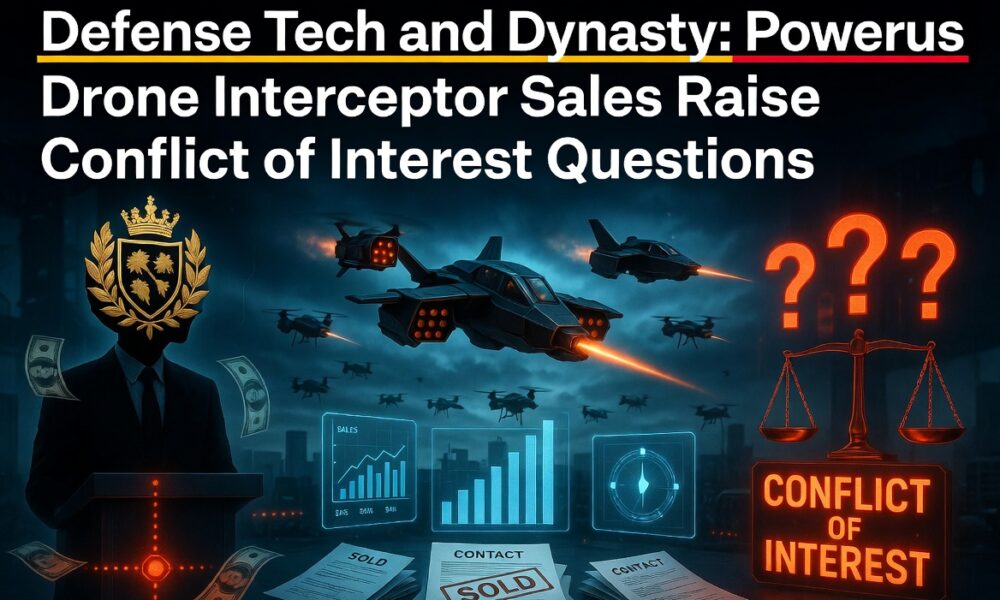
The intersection of foreign policy, war machines, and private enterprise is drawing intense scrutiny in Washington this week. Florida-based defense contractor Powerus is currently launching a massive sales drive to supply advanced drone interceptor technology to Gulf states that are actively facing aerial bombardment from Iran. The aggressive international push comes just weeks after the firm finalized deals to bring Eric Trump and Donald Trump Jr. into its corporate structure.
The timing of the sales initiative has sparked fierce debate on Capitol Hill regarding the ethics of military-industrial contracts. Critics point out that the company is perfectly positioned to reap massive financial benefits from a lucrative defense market heavily stimulated by a war spearheaded by the Trump administration. The advanced drone interceptors are highly sought after by allied nations in the Gulf seeking to neutralize the swarm tactics frequently utilized by Iranian proxies.
The controversy is compounding an already tense political environment for the White House. While the administration is pushing Congress for a $1.5 trillion military budget to sustain the conflict, the optics of the president’s immediate family backing a defense firm selling hardware to the very region destabilized by US military action is providing heavy ammunition for political opponents heading into the spring legislative sessions.
Adding to the skepticism is the unproven nature of the technology itself. Powerus’s flagship product, the “Aegis Swarm-Breaker,” relies on a newly developed combination of localized directed-energy bursts and micro-munitions to disable incoming drone swarms. However, the system has never been deployed in sustained, real-world combat scenarios. Defense analysts are openly questioning whether Gulf buyers are securing a genuine tactical advantage or simply purchasing highly-priced, beta-stage hardware fueled by political connections.
In response to the mounting pressure, several prominent government watchdog groups announced they are drafting emergency injunctions to block the State Department from issuing the necessary export licenses. Citing the Arms Export Control Act, their legal teams argue that the direct financial involvement of the President’s family creates an unprecedented conflict of interest, one that fundamentally compromises the Pentagon’s standard security and vetting protocols for foreign military sales.




No Comment! Be the first one.