


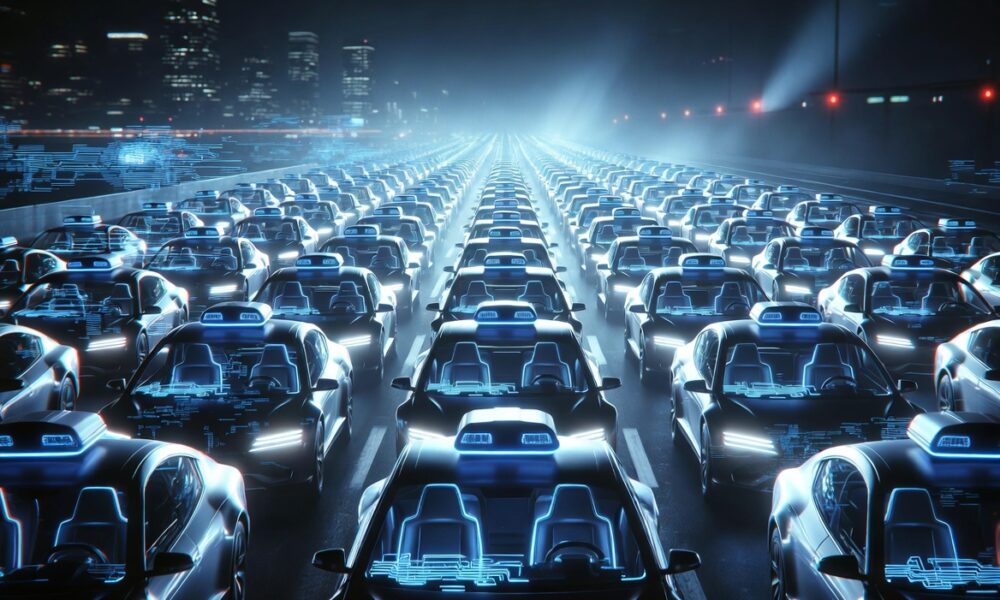
The promise of a seamless, automated future ground to a very sudden and very literal halt yesterday in several major Chinese municipalities. A widespread, synchronized software malfunction caused fleets of autonomous robotaxis to stall simultaneously, turning busy intersections and multi-lane expressways into parking lots and leaving thousands of passengers stranded.
According to preliminary reports from transit authorities, an over-the-air firmware update pushed to the vehicles contained a critical routing error. Instead of navigating around obstacles, the vehicles’ safety protocols engaged en masse, interpreting normal traffic patterns as impassable hazards. The result was a cascading failure: cars simply stopped in their tracks, put their hazard lights on, and locked their doors, awaiting manual override commands that were severely delayed due to overloaded server networks.
Local social media was immediately flooded with surreal footage of pristine, driverless vehicles sitting empty in the middle of chaotic intersections while human drivers laid on their horns and attempted to maneuver around the futuristic gridlock. In several instances, local police had to physically break vehicle windows to assist passengers who were unable to manually open the doors from the inside during the system freeze.While the companies involved managed to reboot the network and clear the streets after several hours, the incident has sparked fierce public debate.
Proponents of autonomous driving have long argued that machines are safer and more efficient than human drivers. However, this massive operational failure has highlighted a glaring vulnerability: when centralized networks fail, the resulting chaos is instantaneous and widespread. Regulatory bodies are now demanding a complete audit of the fleet’s emergency override capabilities before the robotaxis are allowed back on the road.






No Comment! Be the first one.