


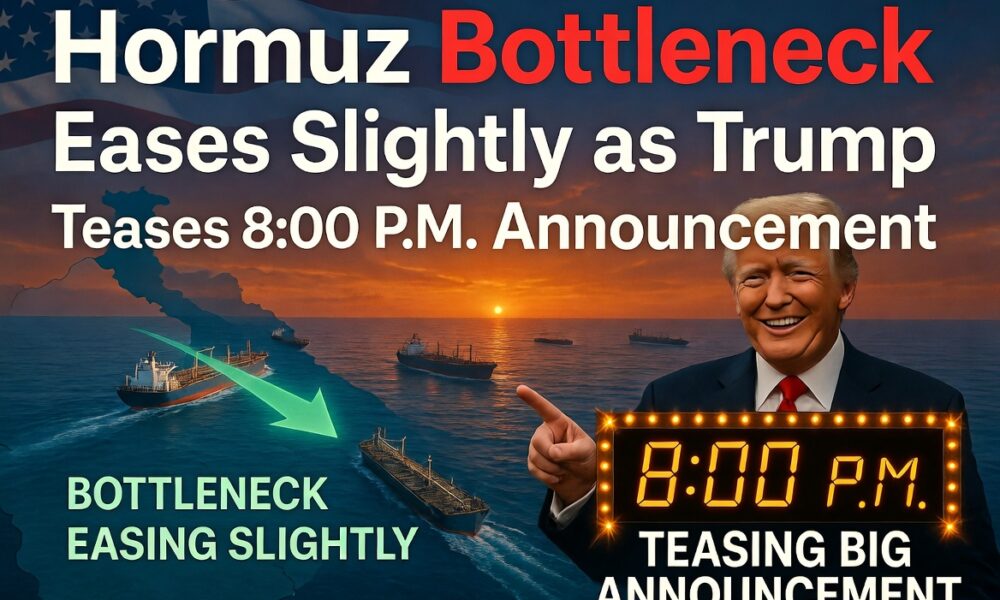
After weeks of crippling paralysis in the world’s most critical energy choke-point, a slight thaw may be emerging in the Strait of Hormuz. Over the past 24 hours, Iranian media confirmed that 15 commercial vessels successfully transited the strategic waterway after explicitly obtaining authorization from Iranian authorities. While this development prevents a total blockade, commercial traffic through the strait remains an alarming 90% lower than it was prior to the onset of the US-Israel-Iran conflict in late February.
The fragile maritime movement coincides with massive political speculation stemming from Washington. US President Donald Trump sent global markets into a frenzy today following a cryptic post on his Truth Social platform that simply read: “Tuesday, 8:00 P.M. Eastern Time.” The president did not elaborate on the post, but during a subsequent interview with Axios, he hinted that a diplomatic breakthrough or a ceasefire deal with Tehran could be imminent, stating, “There’s a good chance tomorrow.”
However, the reality on the ground remains deeply violent. Amidst the political signaling, reports have emerged of intense, direct clashes breaking out between Iranian forces and US troops. The firefights were reportedly triggered during a high-risk operation to extract an American aviator who was downed earlier in the conflict, underscoring the immense volatility that threatens to derail any potential Tuesday night agreement.
The sheer unpredictability of the situation has left global energy markets in a state of whiplash. Immediately following the President’s post, Brent crude futures plunged by 6% on hopes of a resolution, only to rebound sharply hours later as reports of the ground firefights surfaced. Traders are warning that this extreme volatility will likely persist until the actual contents of the Tuesday night announcement are revealed, making long-term fuel pricing nearly impossible to forecast.
Behind closed doors, the diplomatic fallout is equally chaotic. European allies, already struggling with the economic fallout of the fuel shortages, are reportedly scrambling to decipher the White House’s strategy. Several NATO diplomats speaking on the condition of anonymity expressed deep frustration, stating they were entirely blindsided by the President’s post and fear the US might attempt to broker a unilateral, narrow agreement that secures American interests while leaving European shipping routes vulnerable.






No Comment! Be the first one.