


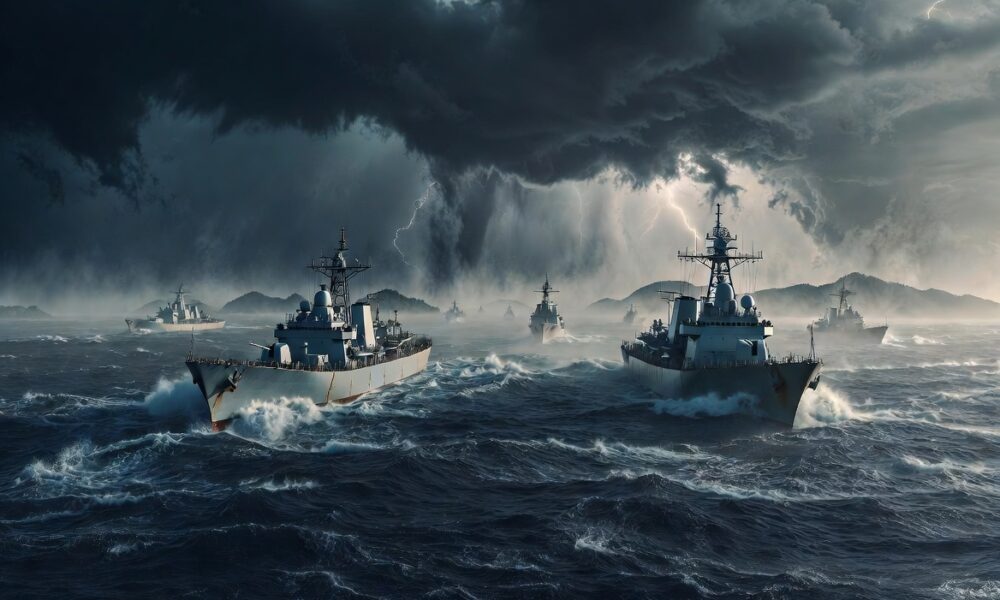
The geopolitical spotlight has suddenly shifted to the Pacific this morning following a highly dangerous South China Sea naval standoff. According to preliminary reports from the US Indo-Pacific Command, two guided-missile destroyers—one American and one Chinese—came within 100 yards of a collision during a freedom of navigation operation.
This unprecedented proximity has triggered emergency diplomatic channels and sent shockwaves through global defense markets.
The Mechanics of the Close Call
The incident occurred near the contested Spratly Islands. Surveillance footage released by the Pentagon shows the Chinese vessel executing an aggressive “bow-crossing” maneuver.
- Evasive Action: The US commander was forced to cut engines and abruptly alter course to avoid a catastrophic maritime collision.
- Radio Silence: Following the near-miss, both vessels reportedly maintained aggressive radio silence while holding their tactical positions, resulting in a tense, multi-hour South China Sea naval standoff.
Global Markets React to the Standoff
The economic fallout from this maritime confrontation was instantaneous. The South China Sea is one of the world’s most vital economic arteries, with trillions of dollars of commercial shipping passing through its shipping lanes annually.
Following the news of the South China Sea naval standoff, major Asian shipping conglomerates immediately halted freighter traffic in the immediate sector. Defense analysts are warning that if naval posturing in this region becomes a daily occurrence, the resulting supply chain disruptions could eclipse the recent turmoil in the Middle East.




No Comment! Be the first one.