


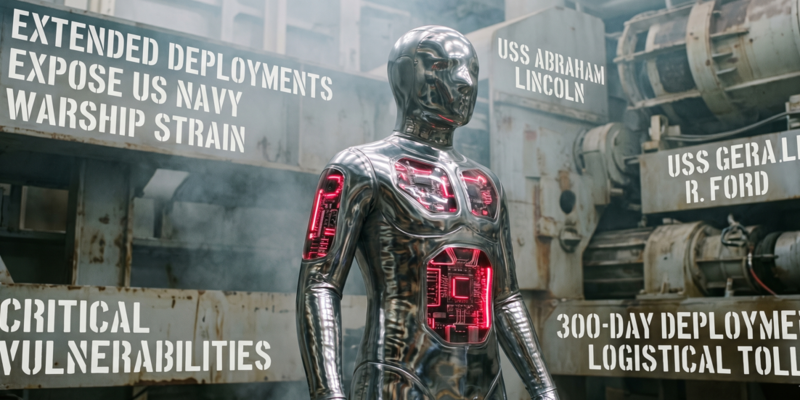
The extended geopolitical standoff in the Middle East is beginning to take a severe logistical toll on American naval forces. Reports surfacing this morning highlight massive US Navy warship strain, as vessels deployed to enforce the Iranian blockade face overextended supply lines and exhausted crews.
The USS Abraham Lincoln and the USS Gerald R. Ford are currently bearing the brunt of these historic, 300-day deployments, exposing critical vulnerabilities in sustaining long-term maritime operations in hostile waters.
Plumbing Failures and Ration Shortages
The daily reality for sailors on the frontlines highlights the extent of the US Navy warship strain. Aboard the $13 billion USS Gerald R. Ford, systemic design flaws have created a daily nightmare for the crew. The carrier’s advanced vacuum sewage system has suffered catastrophic failures, severely impacting the quality of life for the 4,500 sailors on board.
The Cost of a Prolonged Blockade
While Pentagon leadership insists that fleet readiness remains exceptionally high, the internal reports of US Navy warship strain tell a different story.
Maintaining multiple carrier strike groups at the operational limit to secure the Strait of Hormuz and enforce the ongoing economic blockade requires an unsustainable logistical pipeline. If the April 22 ceasefire deadline passes without a diplomatic resolution, defense analysts warn that the US Navy may be forced to rotate heavily fatigued crews into an active shooting war.




No Comment! Be the first one.