


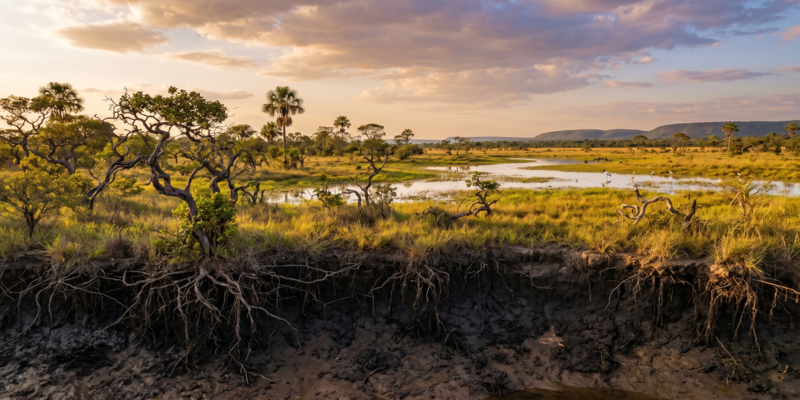
Unlocking the Carbon Vault in the Brazilian Cerrado
According to the latest research, the wetlands hidden within the Brazilian Cerrado hold six times more carbon per hectare than the lowland Amazon forest. This staggering discovery forces a complete reevaluation of South American ecosystems. Using a combination of deep-soil sampling and advanced satellite mapping, researchers estimate that the Cerrado’s wet grasslands could store up to a massive 20 billion metric tons of carbon dioxide.
Table Of Content
This revelation is currently trending across environmental news networks and social media platforms, as climate activists and policymakers scramble to understand the implications. The Cerrado is no longer just a biodiversity hotspot or a crucial water tower for adjacent regions; it is a vital carbon stockpile that the world cannot afford to lose.
The Groundbreaking 2026 Study: Deeper Soil, Higher Stakes
What makes this May 2026 study so revolutionary is the methodology. Previous analyses of carbon stocks in the Cerrado rarely looked past the top meter of soil. However, the latest field teams collected peat from sites in and around Chapada dos Veadeiros, digging as deep as 4 meters (13 feet).
By going deeper than anyone thought necessary—or even possible—the researchers discovered organic soils containing carbon older than 20,000 years. Because past research only sampled the first 20 to 100 centimeters of soil, historic estimates of the Cerrado’s carbon capacity were off by an astonishing 55% to 90%. This deep-soil carbon represents a fragile, ancient vault that has been safely sequestered for millennia.
The Looming Threat: Climate Change and the Dry Season
While the discovery is monumental, it comes with a severe warning. The research team utilized trace gas analyzers over a full year to measure emissions, finding that 70% of the Cerrado’s annual emissions occur during the dry season, peaking in September.
As global temperatures rise and the Cerrado becomes hotter and drier, these ancient peatlands are becoming incredibly vulnerable. Draining the land for agriculture, combined with longer dry spells and more frequent wildfires, threatens to unlock this previously stable carbon pool. If the 20 billion metric tons of stored carbon are released into the atmosphere, it would catastrophic for global greenhouse gas emission targets.
Policy Implications: Rewriting Brazil’s Forest Code
The trending discussions surrounding this discovery are heavily focused on policy reform. Currently, Brazil’s Forest Code mandates that private properties in the Amazon must preserve native vegetation across at least 80% of their land. In stark contrast, the legal reserve requirement for the Cerrado is a mere 20%.
Environmental advocates are using this new data to lobby for immediate legislative amendments. Because the study found that the wet grasslands (veredas) store four times more carbon than dry vegetation in the Cerrado, experts are suggesting targeted protections. By utilizing precise satellite mapping, the Forest Code could be amended to force landowners to protect the most carbon-rich habitats within their parcels, rather than just a flat percentage of land.
Why the Cerrado Matters for Global Climate Goals
As we navigate through 2026, the preservation of the Cerrado is no longer just a local Brazilian issue; it is a global imperative. The world is heavily reliant on natural carbon sinks to offset industrial emissions. Protecting the deep peatlands of the Cerrado is arguably one of the most cost-effective and urgent climate strategies available today. This trending environmental awakening highlights the critical need to fund deep-soil research in other tropical wetlands worldwide.







No Comment! Be the first one.