


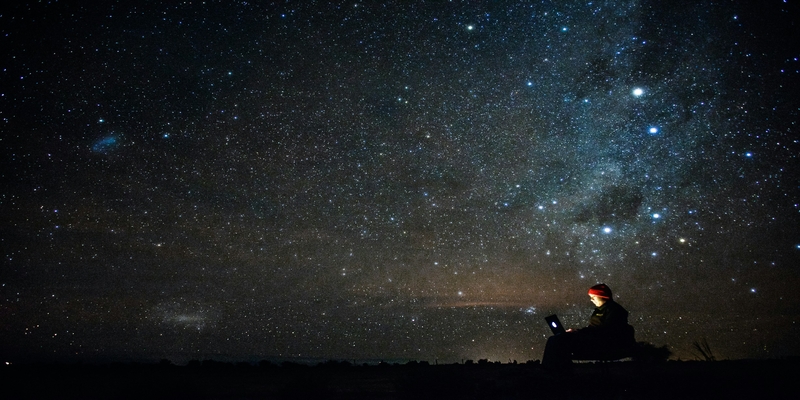
The world’s darkest skies face a serious threat from growing light pollution. The Atacama Desert in Chile experiences new dangers from industrial expansion. This dry region gives humanity a clear window into the deep universe. Astronomers build the largest telescopes in this quiet zone. Recent energy projects and expanding cities threaten this vital scientific work. Stronger laws must protect this rare natural asset.
Table Of Content
A Perfect Window to Space
The Atacama Desert offers unique conditions for space observation. The landscape feels completely alien. It holds the title of the driest place on Earth. The region provides more than 300 clear nights every single year.
Rain rarely falls in this barren land. Clouds almost never form over the tall mountains. Scientists travel thousands of miles to this exact location. They seek the perfect dark sky.
A massive science community thrives in this remote desert. Almost 30 different astronomical sites operate in northern Chile. These sites house highly advanced equipment.
The European Southern Observatory runs the famous Paranal Observatory here. Researchers study the origins of the universe from these high mountains. The quiet environment makes deep space visible to the naked eye. Entire galaxies stretch across the night sky.
Massive Projects on the Horizon
Scientists plan even bigger machines for the near future. Workers are building the Extremely Large Telescope right now. This new tool costs 1.5 billion dollars. Teams will finish the massive structure in 2030.
The telescope features an enormous mirror. The mirror spans nearly 40 meters across. The device will capture the faintest lights from distant planets. It will help humans search for alien life.
New Threats in the Desert
However, modern progress brings major problems to the area. Twenty years ago, the desert felt like an ocean of pure darkness. The situation looks very different today. Urban sprawl brings bright city lights closer to the telescopes.
Mining companies expand their operations across the landscape. Renewable energy projects seek land in the sunny desert. These developments introduce unwanted artificial light into the atmosphere.
A recent megaproject caused massive panic among global scientists. A company proposed a huge industrial complex near the Paranal Observatory. The plan included a hydrogen fuel plant and wind farms.
The site sat just 10 kilometers away from the telescopes. The project covered roughly 3,000 hectares of pristine land. This massive size rivals a small city.
The Fight for the Night
The proposed complex promised devastating effects on the observatories. Industrial lights would flood the night sky. The activity would generate heavy dust. Machines would create tiny ground vibrations.
These elements easily disrupt highly sensitive telescope mirrors. Bright blue photons ruin long-exposure photographs of distant star systems.
Experts fought back against the industrial proposal. They warned the government about the extreme risks. A famous Nobel laureate signed a strong warning letter. The astronomy community pushed for better protection.
The company eventually withdrew the controversial project after intense public pressure. The desert avoided a major scientific disaster.
The Core Problem Remains
Despite this victory, the core problem remains unsolved. The current environmental rules lack real power. Weak laws cannot stop future companies from trying again.
The global night sky grows about 10 percent brighter every single year. Observatories everywhere run out of safe places. Humanity loses its connection to the stars.
Telescope workers go to great lengths to preserve the darkness. Specialists live in special underground rooms at Paranal. They act like moles in the dark. They cover their windows at all times.
They only use dim flashlights during night walks. A single stray beam of light ruins hours of expensive research. Their dedication highlights the extreme fragility of the work.
What Happens Next
Protecting this desert requires serious government action. Local groups like the Cielos de Chile Foundation demand stricter building criteria. They want guaranteed safe zones around all science facilities.
The fight over the Atacama Desert teaches an important lesson. Light pollution harms more than just science experiments. It disrupts local wildlife patterns. It alters ancient cultural connections to the sky. It steals a beautiful natural heritage from future generations.







No Comment! Be the first one.